Ire Maiden
A first-person magic movement shooter made in Unity by a team of 10. I led the project and built every level from planning and blockout through final lighting.
- Role
- Project Lead / Level Designer
- Engine
- Unity
- Team size
- 10 developers
- Duration
- Jan – May 2026 (one semester)
- My contributions
- Led project management and team production · built all levels from planning and blockout through final implementation · programmed the player locomotion system · all lighting and post-processing · parts of the settings menu
Overview
You play an evil, furious, and very powerful lich king storming a castle for revenge, destroying everyone in your way. The core loop rewards clearing each level as fast as possible while taking out as many enemies as you can, using three spells, a primary fire, and fast movement.
On Ire Maiden I worked two jobs. As project lead I ran production for a team of 10: planning, task tracking, and keeping the build together. As the only level designer I owned every level, from layout to lighting. I also programmed the player's locomotion, so I could tune movement and level spacing together.
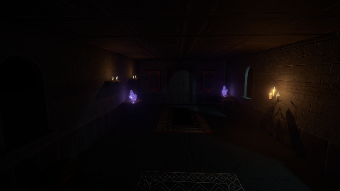
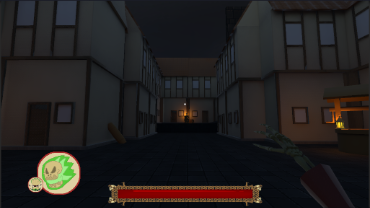
The levels below show that pipeline: greybox blockouts iterated for layout, a lighting style guide built from test props, then a final polish pass that gives the game its dark, torch-lit look.
Design goals
- Layouts sized to the movement system I built
- Fast routes that reward speed and aggressive play
- Torchlight that leads players through dark spaces
- A consistent lighting style across every level
Blockout iterations
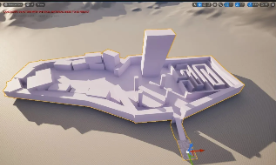
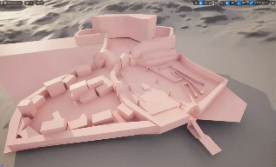
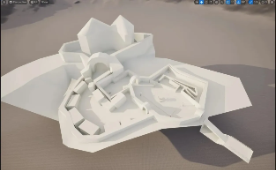
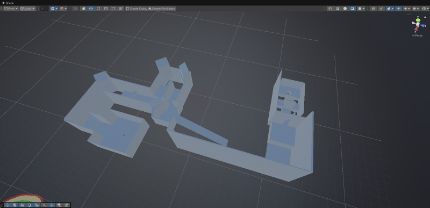
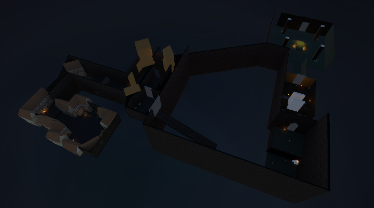
I blocked out the main level three times, changing the outer wall shape, the building masses, and the entry ramp on each pass. A fourth blockout laid out the interior route as a chain of connected rooms and corridors.
Lighting process
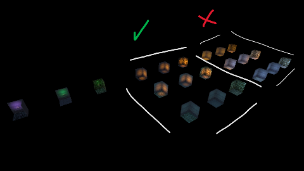
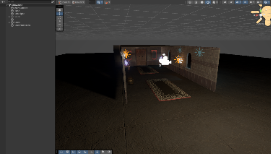
Before lighting the levels, I built a small test scene of light sources to pick a palette, then kept the approved ones and dropped the rest. The approved set became the standard I used in every room.
Final polish
In the final pass I lit and dressed every level, then checked each one in-game from the player's eye level.
What I learned
- Test mechanics in the blockout. Running spells and movement through greybox levels early showed me what each layout had to support.
- Plan production in sprints. Building the schedule around sprints left time to refine levels after every playtest.
- Leading means delegating. On a 10-person team, handing off work was the only way to support everyone and still do my own design.
Time spent
One full semester, January–May 2026, with the whole 10-person team on board from the first week.